
I recall the very first time I looked at a casino homepage and noticed a small logo at the bottom mentioning a regulatory body I had never known. It signified nothing to me then. Over time I learned that those small badges bear immense importance, distinguishing platforms that operate under strict supervision from those that answer to no one. The true story about casino licensing is not glitzy, but it dictates whether your funds are secured, whether games generate fair results, and whether you have any recourse if something goes wrong. Comprehending this process transformed how I assess every operator I explore, such as the one you are reading about now.
Why a licence is the only real safety net
Numerous gamblers believe a glitzy site or a big advertising budget suggests credibility. It does not. The single trustworthy marker is a proper permit issued by a recognized authority that enforces compliance through reviews, fines, and the power to cancel operational licenses. A permit compels the provider to separate player funds from operational accounts, implying your deposit is not handled as business income that can be spent on wages or advertising. It also demands external auditing of each game result. Without a license, you are basically handing money to an organization with no binding requirement to disburse prizes, secure your details, or even ensure the site functions tomorrow.
The bonus terms that licensing compels into the open
Every welcome offer appears generous until you review the fine print. A regulator requires that fine print to be present and be accessible before you deposit. Wagering requirements, game contribution percentages, maximum bet limits during bonus play, and time restrictions must all be revealed in plain language. I have seen operators licensed in strict jurisdictions forced to simplify their terms after regulators deemed them misleading. A typical offer might combine a deposit match with free spins, but the real value depends on whether the wagering multiplier is 25x, 35x, or 45x the bonus amount, and whether certain games contribute 100% or only 10% toward fulfilling that requirement. Licensed platforms must also clearly specify any winnings caps attached to no-deposit offers, eliminating the nasty surprise of hitting a big win you can never actually take out.
Managing country restrictions without frustration
A licence comes with territorial limitations. An MGA licence enables operators to accept players from many countries but explicitly prohibits others where local laws conflict or where the regulator has not established mutual recognition agreements. You may face a message stating that registration is unavailable from your location. This is not arbitrary discrimination; it is the operator complying with licence conditions that carry severe penalties if breached. The practical step is to check the terms and conditions page for a list of restricted territories before attempting to sign up. If your country appears on that list, no VPN workaround will help because the verification process will ultimately require proof of address in an eligible jurisdiction, and attempting to circumvent these restrictions can result in permanent account closure and forfeiture of any balance.
The ID check you must not avoid
I used to find Know Your Customer checks irritating until I grasped their reason. A licence mandates that the operator verify your identity, age, and address prior to handling significant withdrawals. This is no delaying trick; it is a legal requirement meant to prevent underage gambling, identity theft, and money laundering. You will generally require to upload a government-issued ID, a recent utility bill or bank statement showing your address, and sometimes a photo of the payment card you used, with certain digits obscured for security. The smartest approach is to submit these documents immediately after registering rather than waiting until you request a withdrawal. Operators with efficient compliance teams can approve documents within hours, meaning your first cashout proceeds without the extra wait that frustrates so many players.
The security infrastructure that secures your data
Licensing requires technical measures that go far beyond a padlock icon in the browser. SSL encryption must protect all data in transit between your device and the server. Payment card information must be masked or handled exclusively by PCI-DSS compliant processors, ensuring the casino’s own database never stores your full card number. Account access should support two-factor authentication, and login attempts must be throttled to prevent brute-force attacks. The platform must also keep logs of every account action—logins, deposits, wagers, game results, withdrawals—in a tamper-evident format that regulators can audit. These requirements are not hypothetical; a security audit is part of the licensing process and is performed periodically. The result is that your personal and financial data benefits from protections equivalent to those at a bank.
What takes place when a licence is breached
Regulators issue enforcement actions, and studying them is instructive. Fines can hit seven or eight figures for major failings related to anti-money-laundering checks or reckless marketing. In extreme cases, a licence is suspended or revoked entirely. When that happens, the operator must cease accepting new players at once and must often refund funds to existing customers under supervision. I have followed cases where player complaints about delayed withdrawals prompted an investigation that exposed deeper solvency issues, causing licence revocation and a mandated repayment plan. This enforcement mechanism is the final backstop. It is why I will only deposit on a platform where the regulator has a public record of taking substantial action, because that record proves the oversight is genuine rather than cosmetic.
Mobile accessibility and the technology standards licences mandate
A licence is not limited to money and fairness; it extends to technical reliability. Regulators demand that games operate consistently across devices, that session logs are maintained, and that the platform can reproduce any disputed round in its entirety. For you, this translates into a practical expectation: the same game library should be accessible whether you enter the site through a mobile browser, a dedicated app if one exists, or a desktop computer. The interface adapts to touch controls, and the cashier processes deposits and withdrawals through the same secure channels irrespective of screen size. If a game loses connection mid-round, the server must log the exact state so your balance is accurately restored when you reconnect. These are not luxuries; they are compliance requirements that safeguard you from technical failures resulting in real money.
The gaming sections you should look for
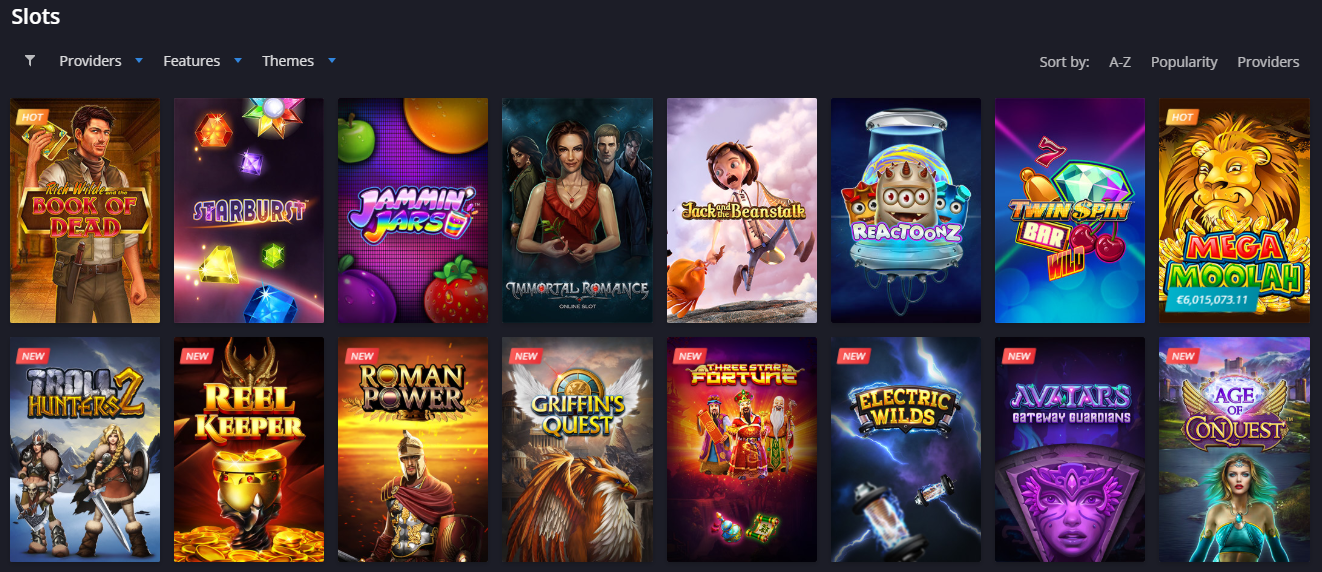
A fully licensed platform typically organizes its library into clear categories that assist you in browsing without endless scrolling. Slots dominate numerically, often subdivided into classic three-reel games, video slots with bonus features, and progressive jackpots where the top prize rises with every wager across the network. Table games represent the following core: multiple variants of blackjack, roulette, baccarat, and casino poker, each with slightly different rules that impact the house edge. The live casino section streams these same games with real dealers. Some platforms also feature a sports betting module, integrating pre-match and in-play markets alongside the casino offering. The unifying thread is that every game in every category comes from a certified provider, and the operator cannot change the underlying mathematics.
Comprehending the house edge without requiring a maths degree
Authorised games disclose their theoretical return to player, but that figure alone may deceive. A slot with 96% RTP means the house holds 4% over an enormous number of spins, but your individual session can deviate wildly from that average. Table games offer more predictable short-term results because the house edge is fixed per round. European roulette with a single zero offers the house a 2.7% edge on most bets, while American roulette with its double zero nearly doubles that to 5.26%. Blackjack played with perfect basic strategy can reduce the house edge below 1% depending on the specific table rules. Knowing these numbers helps you choose games where your bankroll lasts longer, and a licence confirms the numbers are real rather than marketing claims.
Transaction handling under a licensed framework
Regulation directly influences how your money moves. Regulated operators must use sanctioned payment providers that themselves follow anti-money-laundering rules. This means the deposit methods you find—Visa, plinko Twin Casino, Mastercard, Skrill, Neteller, bank transfers, and increasingly instant bank payment solutions—are connected through channels that check transaction validity. Withdrawal times are not arbitrary either. A licensed platform must process requests within a certain window, though the exact speed varies by the method used. E-wallet payouts often finish within 24 hours once confirmed, while card withdrawals may take three to five business days. The key point is that a permit compels the operator to pay validated winnings within a reasonable timeframe, and the regulator will look into if patterns of delay emerge.
Live casino and the further level of licensing scrutiny
Live dealer games bring real studios, physical cards, and live dealers into the equation, which increases the regulatory requirements. The studio itself must hold a separate licence or operate under the platform’s present permit with additional inspections. Cameras need to capture every angle without blind spots, cards must be changed regularly, and wheels must be tested for balance. The game presenter observes strict procedures: they cannot touch chips once bets close, and every action is logged against a digital record of wagers placed. When you play live blackjack or roulette on a licensed site, you are watching a stream from a facility that undergoes physical audits equivalent to those of a land-based casino pit. This is why live dealer games from Evolution or Pragmatic Play Live appear on regulated platforms almost exclusively.
The reason customer support quality demonstrates licensing standards
A regulator requires the operator to provide competent support channels that can handle disputes before they proceed to the regulatory body. This means live chat should be offered during reasonable hours, email responses should come within a stated timeframe, and agents should have ability to transaction logs and game histories to look into specific complaints. When I test a platform, I ask support a concrete question about withdrawal timeframes or bonus terms and check whether the answer is specific or evasive. A licensed operator educates staff to give precise information because vague promises can constitute a compliance violation if a player later objects to the regulator. The support team is effectively the first tier of the dispute resolution process, and their competence or lack thereof reveals you a great deal about how seriously the operator takes its obligations.
The way a licence shapes the titles you actually experience
An authorized operator does not simply upload any slot or table game they find. All titles must come from a studio that itself possesses certifications from independent testing agencies like eCOGRA, iTech Labs, or GLI. These testing bodies check that the random number generator delivers truly unpredictable outcomes and that the advertised RTP corresponds to reality over millions of simulated rounds. This has real implications: a slot advertising 96% RTP must return approximately that rate over its entire lifecycle, and the testing body checks this. Unregulated sites are known to manipulate these figures. On a fully regulated site, the game library typically includes titles from well-known studios such as NetEnt, Pragmatic Play, Play’n GO, and Evolution, precisely because those studios decline to supply unlicensed operators.
Gambling safety features that a licence requires
Any operator holding a valid licence must supply a set of tools that enable you regulate your wagers and time. Deposit limits can be set daily, weekly, or monthly, and lowering a limit must become active immediately while increasing one activates a cooling-off period. Session time reminders appear at intervals you choose, and reality checks display your net position over the current session. Self-exclusion options must be visible and functional, allowing you to ban access for six months, a year, or permanently. The operator is also obliged to refer to independent support organizations and to educate support staff to spot problematic behaviour patterns. These features are not extra add-ons; a regulator will revoke a licence if the tools are tucked in menus or stop to work as described.
The regulators that truly count
All licences do not hold the same value. Malta’s gaming regulator has developed a standing for thorough regulation while keeping a sensible approach for operators targeting players worldwide. The licensing process alone can extend beyond a year and entails background checks on every beneficial owner, software audits, and demonstration of enough capital. The UKGC goes a step beyond, fining operators millions for compliance failures and publicly naming those who violate regulations. Curacao’s licensing body, by contrast, presents a less strict structure with lower fees and less continuous requirements. When I check a casino, I seek out MGA or UKGC badges specifically because such bodies have shown they will take firm action when standards slip, defending customers in ways a Curacao licence alone cannot guarantee.
Steps to check a licence statement for you
An operator can show a regulator’s logo without permission. I have observed unlicensed sites do precisely that. The only way to be certain is to consulting the regulator’s public register. For the Malta Gaming Authority, you visit their website, look through the licensee database, and verify the URL corresponds and the licence status shows as active. The UK Gambling Commission offers a similar public register queryable by name or licence number. A legitimate operator may also display a clickable seal that connects directly to their entry on the regulator’s site. If the seal is an unmoving graphic, if the link points nowhere, or if the licence number does not appear in the official database, you should not place a single cent. This check needs two minutes and is the most worthwhile habit any player can develop.
What really makes a fully licensed experience stand out
Beyond the regulatory framework, the regular experience on a well-licensed platform reveals itself in small but growing ways. Games load quickly because the operator invests in server infrastructure that must meet uptime standards. Promotions come with plain, concise terms that do not require a lawyer to interpret. Withdrawal requests move forward through their stages with status updates viewable in your account. The game library renews regularly as providers launch new titles and the operator’s compliance team authorizes them. clairement expliqué These qualities are not coincidental; they flow directly from the operational discipline that a serious licence enforces. When I check out a site like Twin Casino, I am seeking exactly these signals: the apparent evidence that the licensing framework has influenced every aspect of the operation from the ground up, creating an environment where I can center on entertainment rather than concerned about whether the rules will be honoured.